
St Anne's Infants' School & Nursery Reach for the Stars
Summer Term 5
How Does Your Garden Grow?
We are excited to find out where the food we eat comes from. We will be learning about fruits and vegetables and how they are grown. We will be making fruit kebabs and fruit salad. This will also help us to think about how we can keep our bodies healthy.
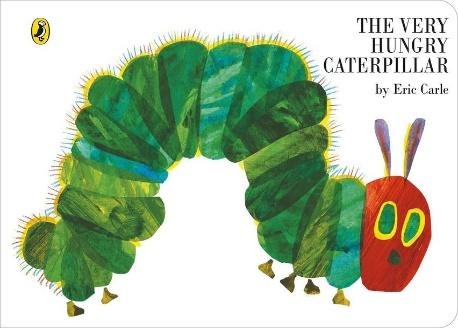
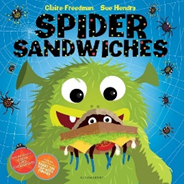
Our focus stories will support our learning about the small creatures who share our garden. ‘The Hungry Caterpillar’ by Eric Carle is an all-time favourite in nursery, and we will be finding out about the life cycle of a caterpillar. We will have lots of fun with the story 'Spider Sandwiches’ by Claire Freedman and Sue Hendra. This will be a great opportunity to make our own silly recipes and try out making our own sandwiches. We will also be explorers and spend lots of time in the outside area looking for other minibeasts. This is a chance to learn how to take care of living things and learn about our environment.
We will continue with our 'First Steps to Phonics' programme and will be introducing some more single letter sounds. The children are thoroughly enjoying this programme and are quickly remembering the sounds.
The 'Development Matters' for the Prime Areas that we will be focusing on are:
Communication and Language
Use longer sentences of four to six words. Be able to express a point of view and to debate when they disagree with an adult or a friend, using words as well as actions.
Use a wider range of vocabulary.
Know many rhymes.
Be able to talk about familiar books, and be able to tell a long story.
Personal, Social and Emotional Development
Talk with others to solve conflicts.
Develop their sense of responsibility and membership of a community.
Physical Development
Uses one-handed tools and equipment, for example, making snips in paper with scissors.
Be increasingly able to use and remember sequences and patterns of movements which are related to music and rhythm.
Collaborate with others to manage large items, such as moving a long plank safely, carrying large hollow blocks.
The 'Development Matters' for the Specific Areas that we will also be considering are:
Literacy
Use letter-like shapes when mark making.
Hear initial sounds in words.
Write some letters of their name correctly.
Engage in extended conversations about stories, learning new vocabulary.
Use some of their print and letter knowledge in their early writing.
Write some letters accurately.
Mathematics
Recite numbers past 5.
Experiment with their own symbols and marks as well as numerals.
Solve real world mathematical problems with numbers up to 5.
Begin to describe a sequence of events, real or fictional, using words such as ‘first’, ‘then…’
Understanding the World
Plant seeds and care for growing plants.
Understand the key features of the life cycle of a plant and an animal.
Expressive Art and Design
Make imaginative and complex ‘small worlds’ with blocks and construction kits, such as a city with different buildings and a park.
Explore colour and colour-mixing.
Create their own songs, or improvise around one they know.